Ask privately, before ordering, whether the person would welcome a pet memorial portrait. Explain what you have in mind, make declining easy, and wait for a clear yes before requesting or submitting a photo. You do not need to judge where they are in their grief or decide when they should be ready for a keepsake.
The sample messages below are hypothetical wording you can adapt, not customer accounts. Use the language you would normally use with this person; a short, familiar message is enough.
1. Ask whether they want to hear the idea
Start by asking permission to discuss a memorial gift. Choose a private message or a quiet conversation without an audience. A group gathering can make it harder to answer freely, especially when other people are watching for a reaction.
You might write:
“Would you be open to hearing a small idea for remembering [pet’s name]? It’s completely fine if you’d rather not. No need to reply; I’ll leave it with you.”
Then give that offer space. Avoid following it immediately with examples, a photo request, or a message saying you have already ordered something.
Permission to hear the idea only opens the conversation. It does not authorize choosing a photograph or commissioning a portrait. If they do not respond, leave the proposal there. You can stay in touch without bringing the gift up again or interpreting silence as agreement.
2. Explain the digital format in a few sentences
Once they are willing to hear more, describe what the gift would actually be. “A portrait” might suggest a framed print, so make the format clear before asking whether they would like one.
For example:
“I was thinking of giving you a digital portrait made from a photo of [name]. It would be an image file to keep, with no need to display or share it. Would that be something you’d like?”
KeptPaw’s pet memorial portrait uses one chosen, usable photograph of one pet. The finished keepsake is a high-resolution PNG for personal use. No physical print, frame, or shipment is included.
Keep the explanation focused on what they would receive. Avoid predicting that the portrait will bring comfort, provide closure, or make a difficult date easier. They can decide whether the idea appeals to them without being asked to expect a particular emotional benefit.
If they want to see the service page, share it then. They do not need a collection of examples to make an initial decision.
3. Make declining, waiting, and choosing the photo easy
Give alternatives that you are prepared to accept. Adding “no pressure” helps little if the next message asks for a decision by Friday.
These hypothetical replies keep the choice specific:
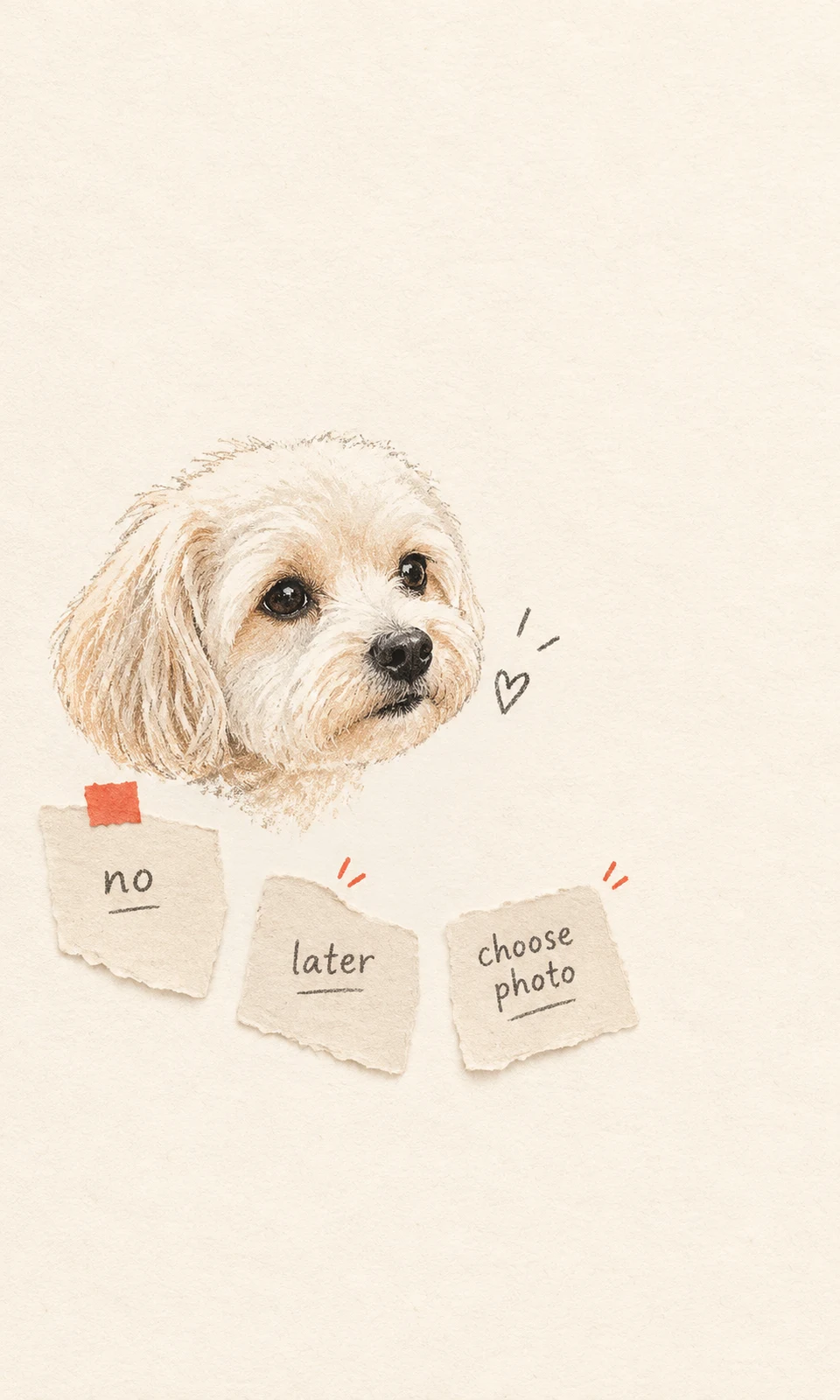
- If they decline: “Of course. Thanks for telling me. You don’t need to explain.”
- If they say maybe later: “We can leave it here. If you ever want to revisit it, you can bring it up.”
- If they want to choose the photo: “Absolutely. There’s no need to look through pictures now. You can choose one whenever you feel like it.”
A refusal does not need a smaller version of the same offer. Avoid responding with another style, a different photograph, or a suggestion that they might appreciate it eventually.
“Later” also does not establish a reminder date. If they specifically ask you to check back, agree on when; otherwise, let them reopen the subject.
Choosing a photograph can be part of accepting the gift, but it need not become an assignment. If they would prefer you to handle that step, ask which existing image they would be comfortable using. Before placing an order, check that the plan still suits them if time has passed.
4. After agreement, discuss the source photo and first proof
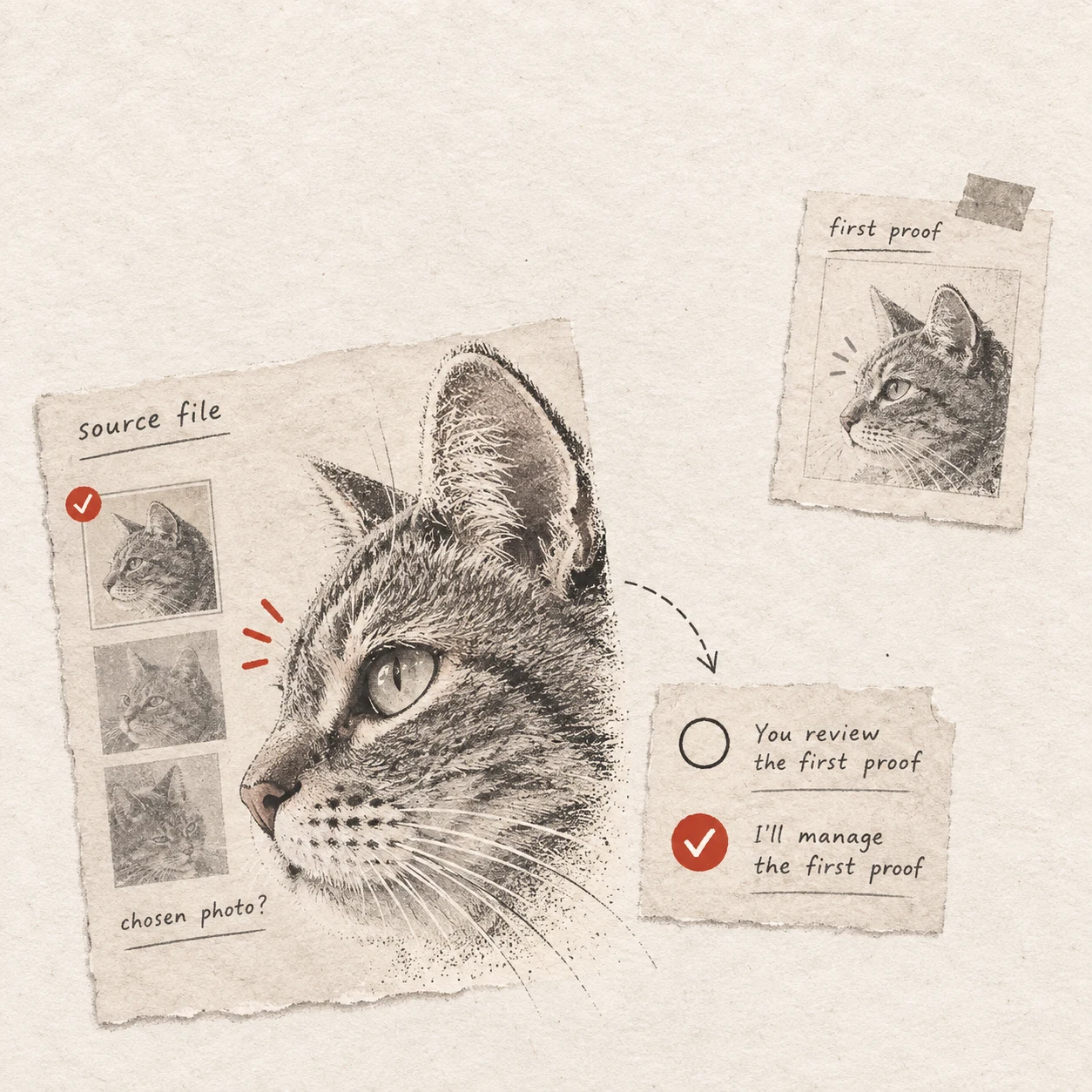
Once they have agreed to the portrait, settle two practical choices: which photograph may be shared with the studio, and how much they want to participate in reviewing the artwork.
Ask for the original file if it is available, and confirm the chosen image before uploading it. A photo they once posted publicly is not a substitute for this conversation. A simple question works:
“Is this the picture you’d like used, and are you comfortable with me sending it to the studio?”
If their preferred image is old or unclear, the guide to using an old photo for a memorial portrait explains what to consider. Missing photographic detail cannot be reliably recovered, so check suitability before making promises about the result.
For the first proof, you could ask:
“Would you like to see the draft, or would you prefer me to manage the review using the details we’ve agreed on?”
KeptPaw’s How It Works guide explains the paid process. It includes a first proof and one focused refinement within the original photo and chosen direction. A new source photo or a complete direction change is a new request, so agree on those choices before ordering.
With the recipient’s agreement, you can request a free photo suitability review before purchasing. That review checks the source image; it does not create an order or charge you. Paid work begins through checkout. If you have already paid, submit the photo and notes through your private order-confirmation route.