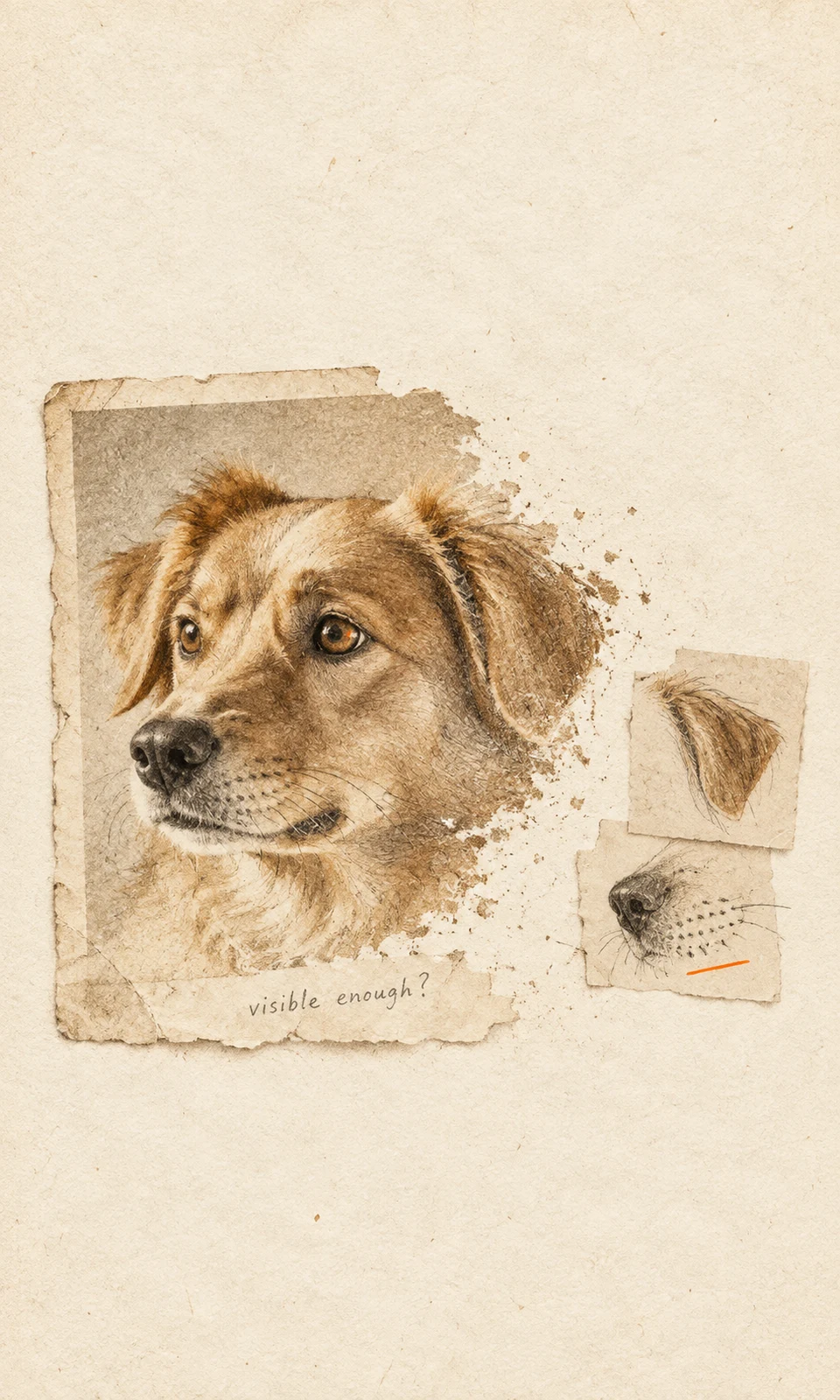
An old photograph may work for a pet memorial portrait if the features that make your pet recognizable are still visible. A faded print, an early phone picture, or a familiar sleeping pose deserves a careful look before you decide. The age of the photograph alone does not determine whether it is suitable.
If it is the only picture you have, there is no need to commit to an order before asking about it. A source-photo review can help establish what the image supports and where its limits are.
Start with the detail you most want to remember
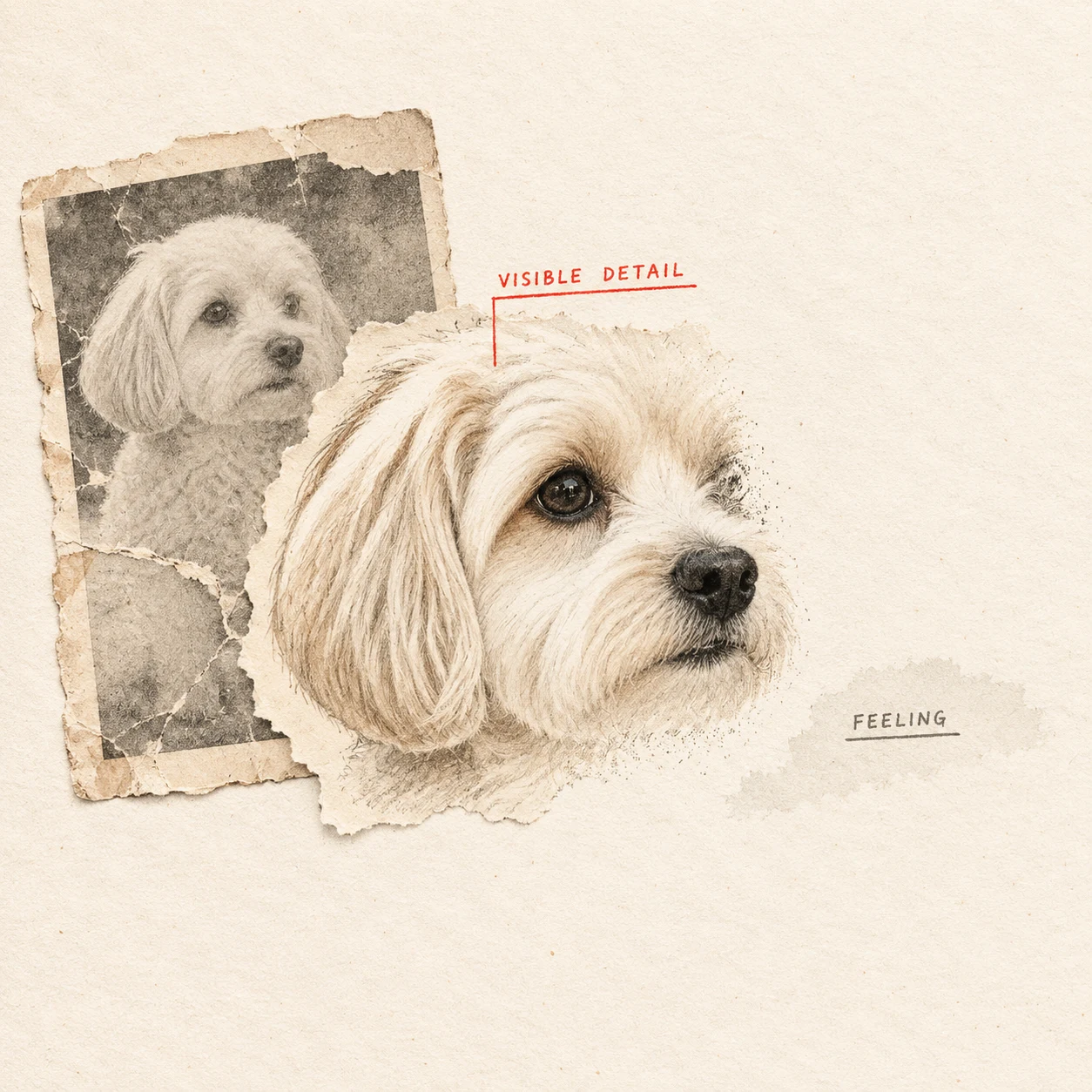
Look at the photograph and name the feature that draws you back to it. It might be a folded ear, a silver muzzle, a small patch above one eye, or the way your pet settled into a favorite chair. Then ask whether that feature can actually be seen in the image.
A profile or sleeping pose can be a meaningful source; a direct gaze is optional. Signs of age may also be part of recognition. If the cloudy eyes or grey hairs belong to the pet you remember, say that you want them preserved.
Try separating your notes into two parts:
- Visible details to keep: features the artist can locate in the photograph, such as an ear shape, marking, collar, or posture.
- The feeling you want: a calm, restrained atmosphere or a sense of an ordinary moment together.
Memory can guide the meaning of a portrait. It cannot supply reliable visual evidence for a feature that the photograph does not show.
Find the best surviving copy
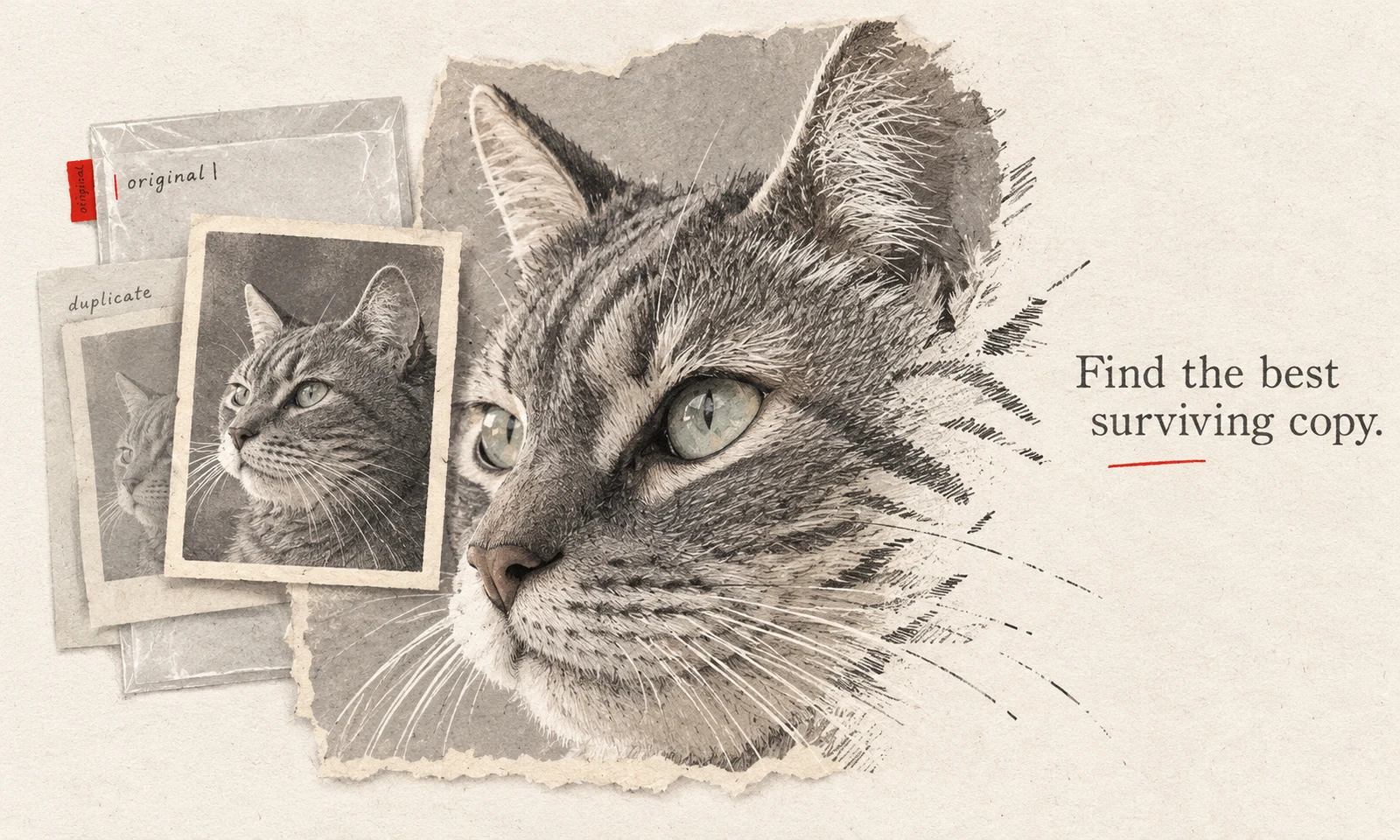
Before editing the picture, check whether a clearer copy already exists. Look for the original in an old camera folder, a phone backup, or an email attachment. If someone else has a copy, ask for the original file rather than another screenshot of it.
Keep the original safe and work from a duplicate. Heavy sharpening, filters, or repeated enlargement may make a picture appear cleaner without making the underlying detail more trustworthy. Send the least altered version available so its limitations can be assessed honestly.
If you only have a paper photograph
Prepare a digital copy before requesting a review. If a scan is available, keep the full image and its natural color. To photograph a loose print, place it flat in even, indirect light, hold the camera parallel to it, and check for reflections or shadows crossing the face. Keep the original print intact.
KeptPaw’s upload accepts one JPG, PNG, or WebP file up to 10 MB. The Photo Guide explains the current requirements. This is a digital portrait service; it does not include scanning or accepting a physical photograph by post.
Decide what the photo can honestly support
A usable source needs enough information for the requested portrait. If the ear shape you want remembered has been cut off, or the face has become indistinct through blur, a larger finished file will not establish what those missing details looked like.
A portrait can simplify a distracting background and draw attention to readable features. It cannot promise to recover an obscured eye, an absent marking, or the original color of a detail that is no longer discernible. A convincing invented detail would still be an invention.
For the specific checks for shadows, cropping, and softness, see Can a Dark, Cropped, or Blurry Pet Photo Still Work?. That guide covers image quality in more detail; the memorial decision also depends on which visible feature matters most to you.
If this is your only photograph, mention that when you ask about suitability. The answer may be that it can support the chosen direction, that the direction needs reconsidering, or that the image does not contain enough information. You can decide after those limits are clear.
Use a photo check before making a commitment
The free photo review checks source suitability before payment. It does not create a free finished portrait or a paid order. Choose one primary photograph and add a short note about the details and feeling you hope to preserve.
KeptPaw’s pet memorial portrait service works with one pet from one chosen photo. The paid process includes a first proof and one focused refinement within the original photo and direction. A different source or a complete change of direction should be discussed as a new request.
The finished keepsake is a high-resolution PNG for personal use; printing, framing, and shipping are not included. If you already have a paid order, use your private order link for the photograph and notes, as explained in How It Works.
You can take time to choose. Begin with the photograph that matters to you, identify what remains visible, and ask for an honest assessment before deciding whether a portrait is the right next step.