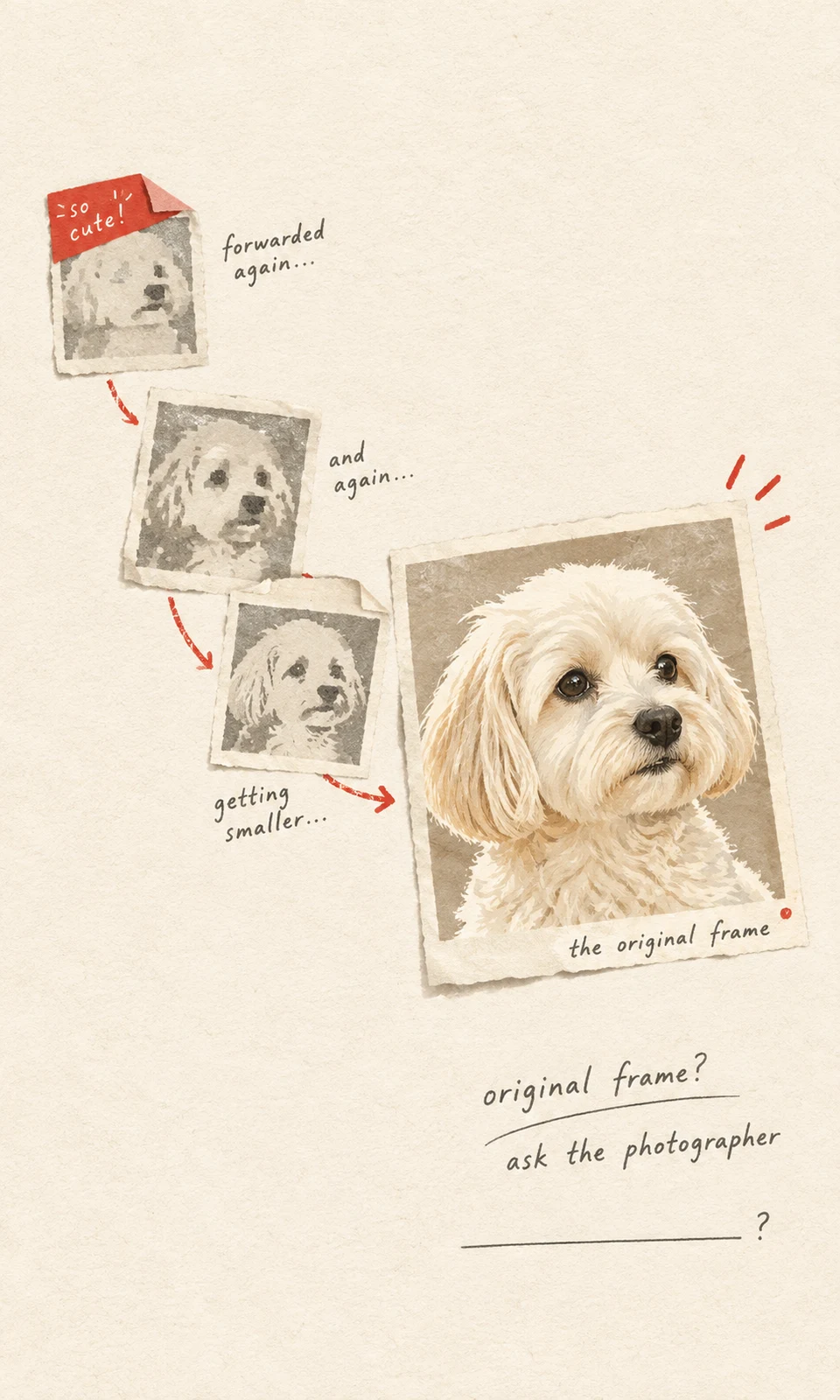
Ask the person who took the photo to find it in their camera album or original backup, then send the unchanged file using a transfer method that preserves it. Identify the exact picture and explain that you need the full frame for a pet portrait. Saving a picture from a family chat does not, by itself, make it the original.
Understand which version you have
Three things can look similar on a phone while containing different amounts of useful detail:
- Chat preview: the image displayed inside a conversation. Its appearance does not establish the quality of the underlying file.
- Saved chat copy: a file downloaded from the conversation. It may have been resized, compressed or cropped earlier, depending on how it was shared.
- Original camera file: the file created when the picture was taken, or an unchanged backup of that file.
A photo being in someone’s gallery does not establish its origin: galleries can also contain downloaded chat pictures. Ask whether the person took it on that device or saved it from a message. That distinction is more useful than asking whether they have a “good-quality version.”
Follow the photo back to its photographer
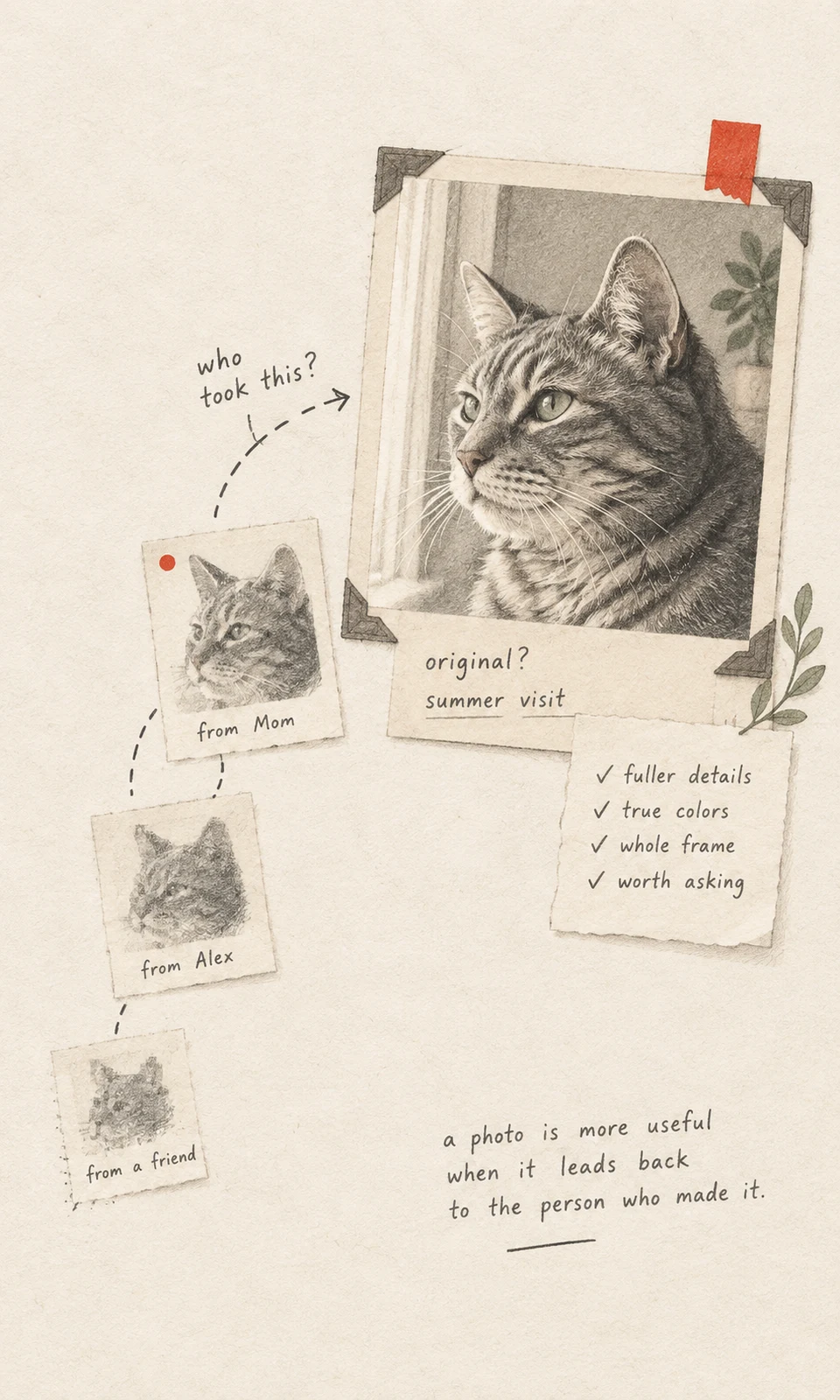
Start with whoever sent you the picture. Ask, “Did you take this, or do you remember who did?” If they received it from someone else, follow that lead until you reach the photographer or someone holding an unchanged copy.
Hypothetical example: your sister forwards a dog photo from an uncle, who says your father took it. Your father’s camera album or backup is the next place to check. Asking your sister to resend her copy may leave you with the same limitations.
Help the photographer locate the frame. Mention the approximate occasion, setting and pose: “The picture from the summer visit, with Pip on the blue rug and one ear folded.” Refer to the existing chat image so they can match it.
Make a specific, easy request
Explain what you need preserved: the original dimensions, full composition and natural color. A short reason helps someone understand why another screenshot will not serve the same purpose.
You can adapt this message:
“Could you send me the original photo of Pip on the blue rug from the phone or camera you used? I’m preparing a digital pet portrait gift, and the full frame and facial detail would help. Please keep the original size, crop and color, and send the file through a method that preserves it. If you only have the chat copy, that’s fine—just let me know.”
If it is a surprise, add a simple request to keep the gift quiet.
Transfer options vary between services. A file attachment or download link can work when it lets you download the unchanged file. Confirm that behavior rather than relying on an option’s name. Avoid selecting a reduced-size export, and ask the sender to keep their original until you have checked the received copy.
Check the file you actually received
Download and open the file itself before deciding whether it is suitable. Looking only at its chat thumbnail can hide both useful detail and problems.
Check these points:
- Matching image: Is it the exact expression and pose you requested? A nearby frame may look similar but feel different.
- Full composition: Are the ears, paws and surrounding space present where they appeared in the source? Note any crop through a feature you want preserved.
- Readable details: At full size, can you distinguish the face, important markings and characteristic ear shape?
- Visible alterations: Are there stickers, strong filters or sharpening effects covering or changing those details?
File size and pixel dimensions can help compare copies of the same picture, but neither proves suitability. A larger file can still contain blur or an enlarged, low-detail image. Even the original can be out of focus.
KeptPaw’s Photo Guide explains how to assess clarity, framing and defining features. Use it once you have found the best available copy.
If the compressed copy is all that remains
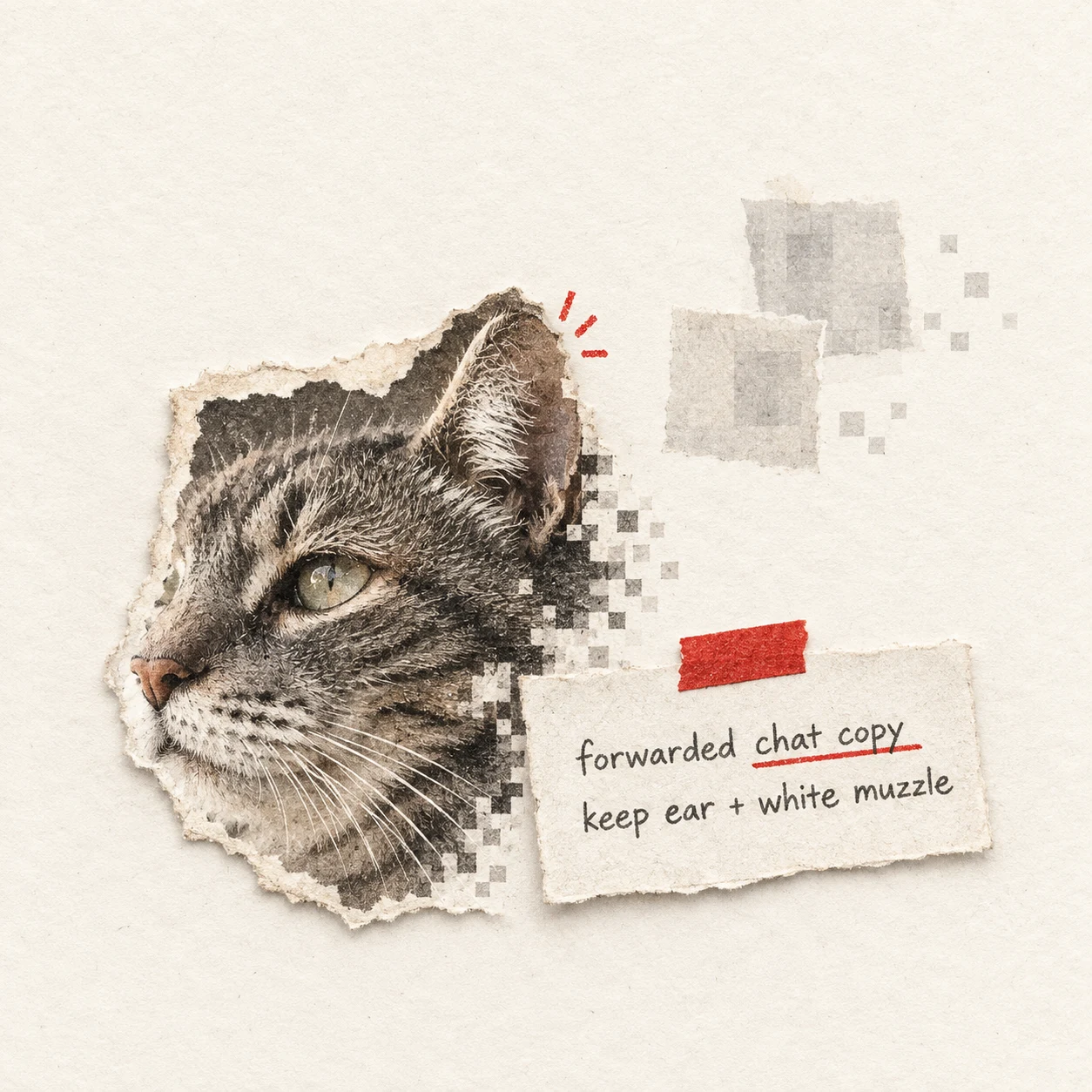
Keep the least altered version you have and describe its history honestly. A useful note might be: “This was forwarded through the family chat, and we haven’t found the original. The folded ear and white muzzle are the details I want to preserve.” This is an illustrative note, not a customer quotation.
Avoid enlarging or heavily sharpening the image to make it appear more detailed before review. Missing photographic detail cannot be reliably recovered. The decision depends on whether the surviving file shows the features needed for the portrait.
KeptPaw accepts one JPG, PNG or WebP file up to 10 MB. If your original exceeds that limit or uses another format, keep it intact and confirm how to prepare a suitable copy before submitting.
Before purchasing, request a free photo suitability review and explain which version you have. The review checks the source image; it does not create an order. Paid portrait work begins through checkout. If you have already paid, submit the photo and notes through your private order-confirmation link, as explained in How It Works.