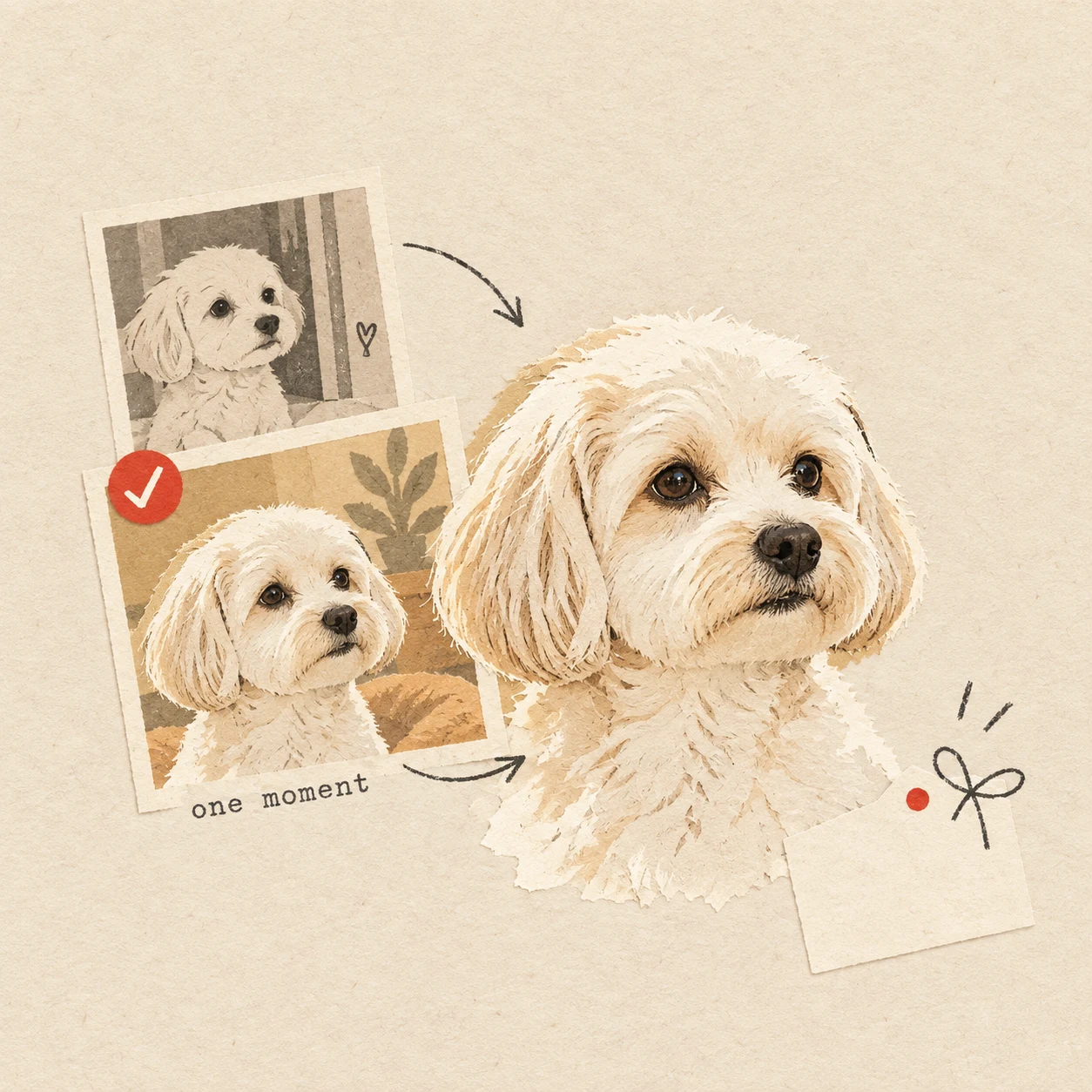
For an adoption anniversary portrait gift, choose the arrival photo when you want to mark the beginning; choose a recent photo when you want to celebrate the companionship the recipient knows today. Either can be meaningful if the pet’s defining features are visible. If the older image hides the face or important markings, a usable current photo with a note about that first day is often the stronger choice.
You can acknowledge both periods while choosing just one photograph for the artwork.
Decide whether you are marking the beginning or life together now
Finish this sentence before comparing image quality: “I chose this moment because…”
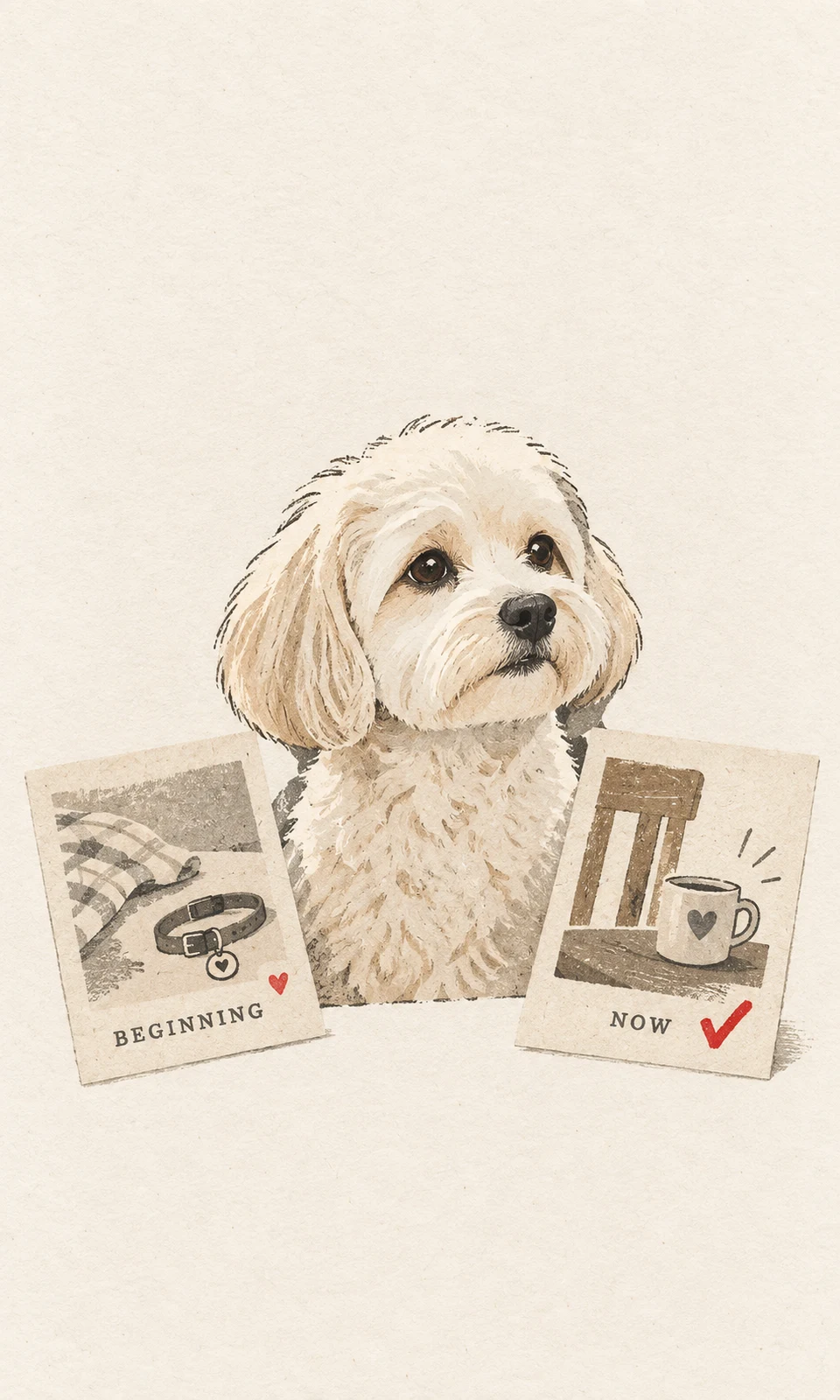
If the answer is “it was the day you brought her home,” start with the arrival photo. Its value may lie in a small detail: the first collar, a familiar blanket, or the expression the recipient remembers from that evening.
If the answer is “this is how she sits beside you every day,” start with the recent photo. An ordinary moment can capture what the anniversary celebrates after years together: recognizable habits and shared routines.
Consider the recipient’s preferences, too. Which photograph do they keep on their phone or return to when telling stories? If the gift is not a surprise, asking them to choose between two images can be part of the occasion.
The chosen image does not have to come from the exact adoption date. A photograph from those early weeks may represent the beginning more clearly.
Compare each photo’s story and visible features
Place the two candidates side by side. For each, write two short lines:
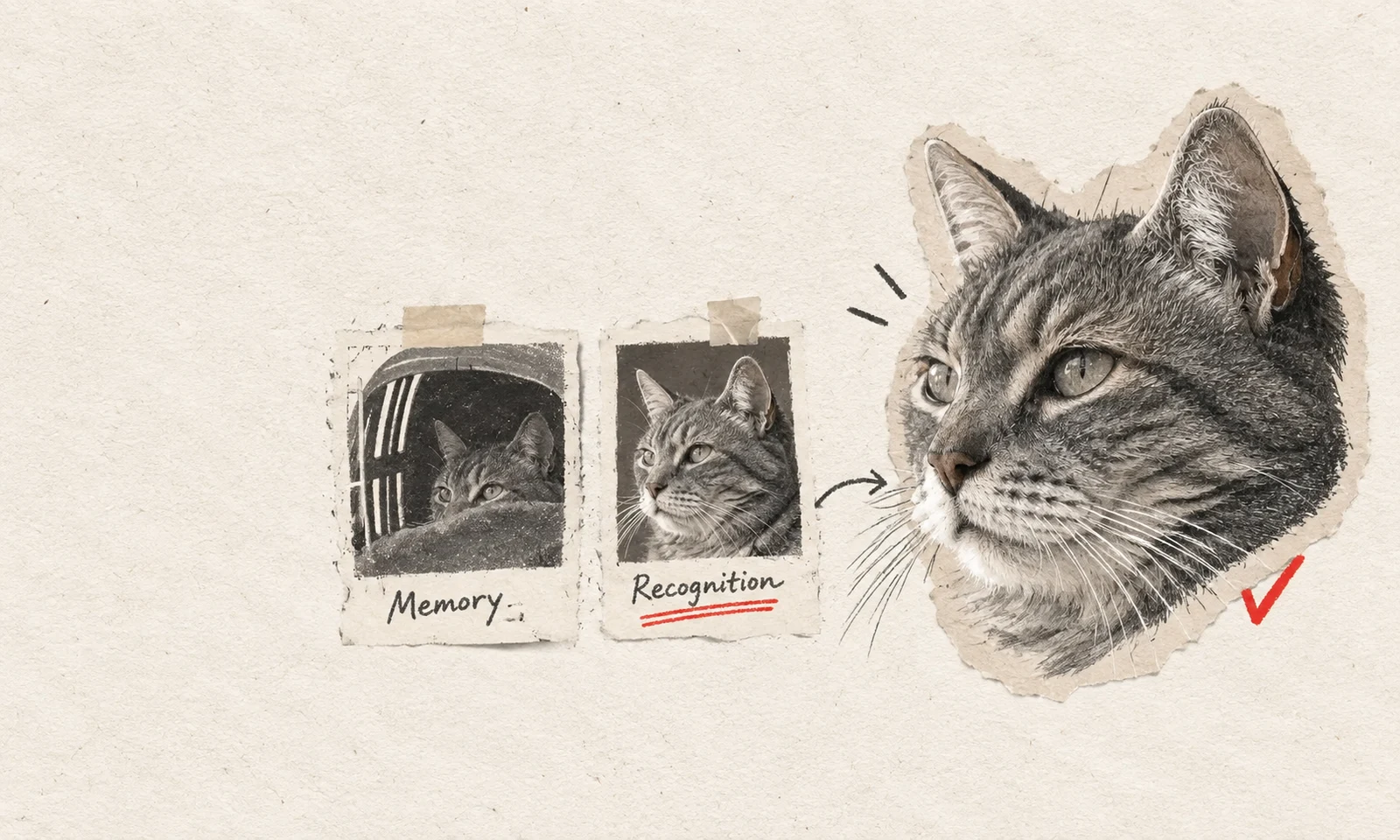
- Memory: What particular moment or routine does this photograph represent?
- Recognition: Which visible features make this unmistakably the recipient’s pet?
Keep the second line concrete. “Her white chin, upright ears and resting gaze” gives you more to assess than “she looks lovely.” Check whether those features are actually readable in the photograph, rather than supplied by your own memory.
In a hypothetical example, an adopter has a first-evening photograph of a cat beside an open carrier and a recent photograph of the same cat resting on their desk. The first image records the beginning, but the carrier partly covers the cat’s face. The desk photograph clearly shows her white chin and familiar resting expression. For a portrait celebrating daily companionship, the desk image offers both a relevant story and visible details to work from.
If both photographs are usable, let the intended memory decide. If only one shows the essential features clearly, give that practical difference weight. Missing photographic detail cannot be reliably recovered.
Use the Photo Guide for the technical checks, including clarity, cropping and finding the original file.
Choose one photograph as the portrait source
KeptPaw’s current digital pet gift covers one pet from one chosen source photo. Select the photograph whose expression, posture and life stage you want represented. Do not assume the finished portrait will combine the arrival and current photographs, borrow a pose from the second image, or recreate an earlier appearance.
If you choose a current photograph, decide whether visible changes such as a silver muzzle are part of what you want to celebrate. Name those details in your notes. If you choose the arrival photograph, be comfortable with the younger appearance it records.
For the hypothetical desk photograph above, a source note could read: “Please use this current photograph. Keep her white chin, upright ears and resting pose. The gift celebrates her everyday company since adoption.”
Settle the source before paid work begins. As the portrait process explains, one focused refinement is included within the original photo and chosen direction. Replacing the source photograph is a new request rather than a refinement.
If you are unsure whether your selected image is usable, request a free photo suitability review. This checks the source image; it does not create an order or begin a paid portrait. Paid work begins through checkout. If you have already ordered, send the photo and notes through the private route in your order confirmation.
Keep the other chapter in your gift message
The accompanying message can connect the portrait’s moment to the memory you left outside the artwork. With an arrival photograph, mention a familiar routine from today. With a recent photograph, recall one detail from the beginning that you know to be true.
You can also put the adoption date or a family nickname in that message without assuming it will be added to the portrait.
Plan time for the gift: the first proof is usually ready within three business days after payment, a usable photo and complete notes are received. Review and final delivery follow, so that estimate is not a guaranteed anniversary delivery date. The finished gift is a digital PNG for personal use.
These hypothetical messages show how the two periods can meet; adapt them only to memories that fit:
- With an arrival photo: “I chose your first evening together. Seeing her curled beside your chair today makes this little beginning especially lovely to remember.”
- With a recent photo: “I chose her usual place beside your desk. On her adoption anniversary, I’m remembering the first evening you brought her home.”