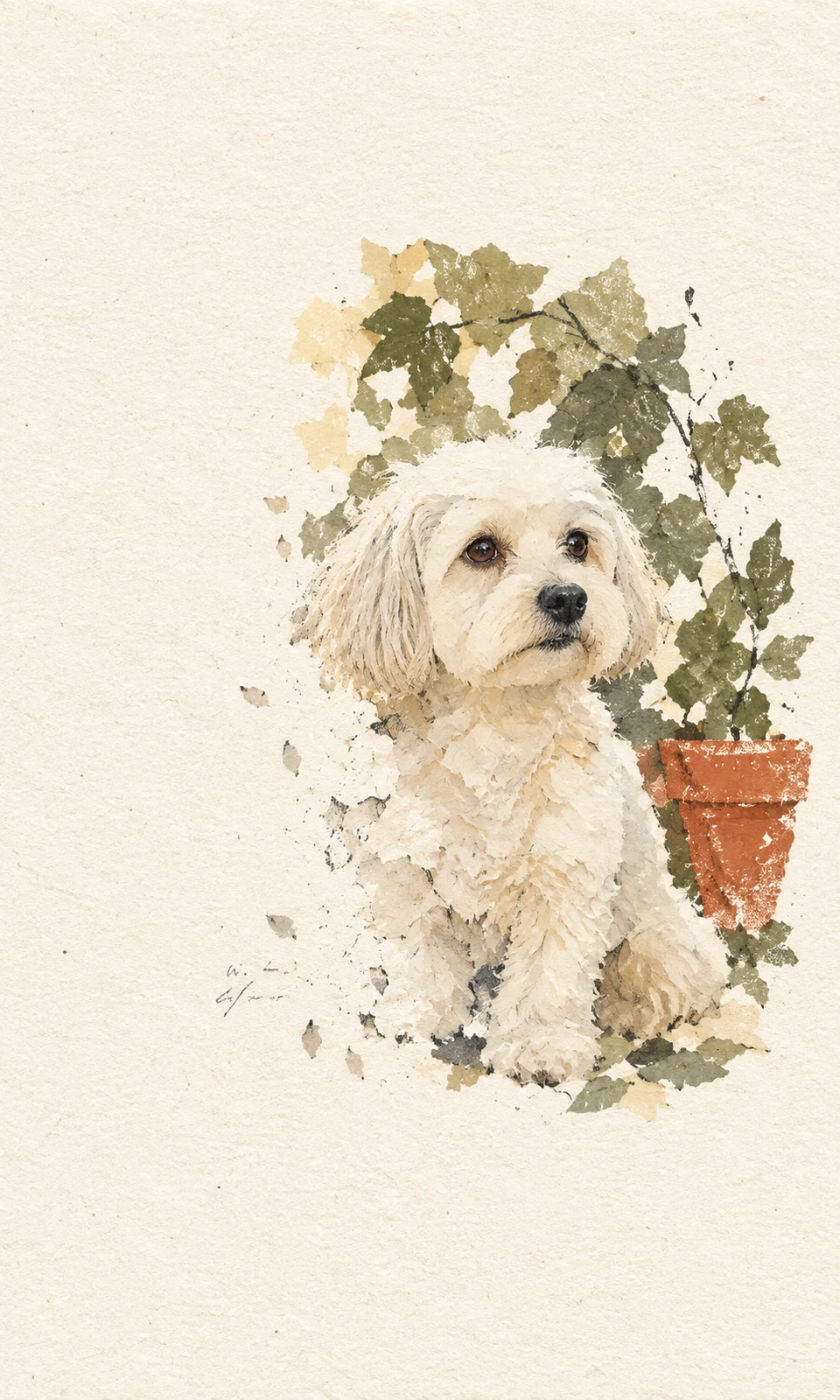
Your portrait proof is the moment to check whether the artwork feels like your pet and whether the chosen direction works. It is easier to make that decision if you review a few things in order, instead of trying to judge every detail at once. This pet portrait proof checklist starts with recognition, then moves to composition and clear feedback.
Compare the proof with your original photo
Open the source photo and the current proof together. First look at the features you would use to recognize your pet: eye shape, ear position, muzzle, distinctive markings, and the relationship between the head and body.
An artistic portrait will not reproduce every hair. The useful question is whether a simplified shape preserves the feature that matters to you. For example, a small pale eyebrow patch may be more important to recognition than individual strands of fur on the shoulder.
Write down anything that seems different before deciding whether it needs a change. Separate a specific observation, such as “the white patch extends farther toward the eye in my source photo,” from a general reaction such as “something feels off.” The observation gives the artist a clearer starting point.
Review the chosen style and composition
Next, look at the artwork at a normal viewing size. Consider the balance around the face, the amount of space surrounding the ears, and whether the background supports the expression you wanted.
Compare the result with the direction you selected, rather than with an unrelated style you have just discovered. KeptPaw’s studio examples can help explain the available visual approaches. A paper-based interpretation and a more distilled editorial composition make different choices about texture and detail; those choices are part of the style.
If your goal was a calm memorial portrait, describe any mismatch in that mood plainly. You might ask for a quieter background rather than asking the artist to “make it more emotional.” Do not feel obliged to invent technical art terms. A precise everyday description is usually more useful.
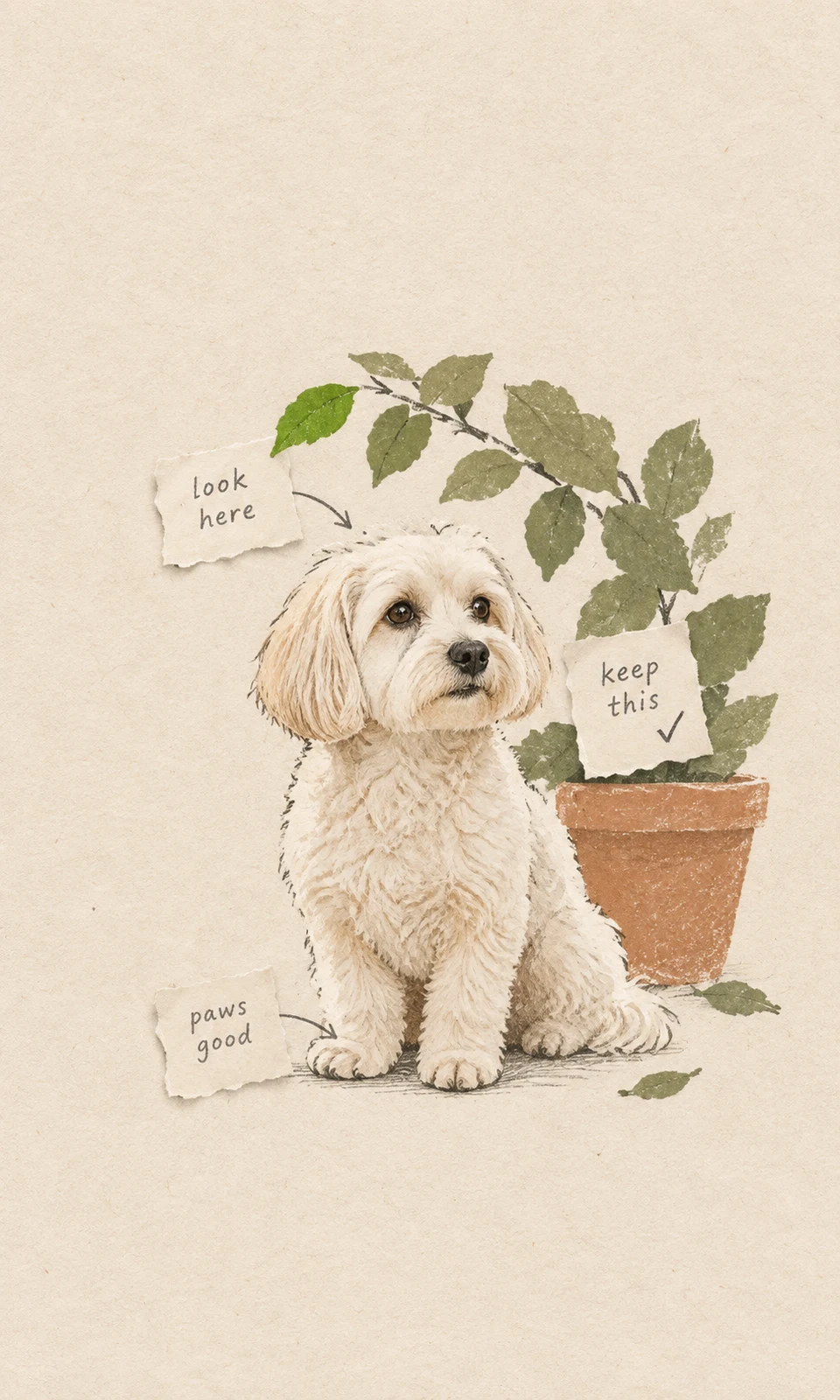
Send one focused set of feedback
At KeptPaw, the current process includes one focused refinement within the original photograph and direction. Read how the portrait process works before deciding what to request. A new source photo, a different pose, or a new art direction should not be assumed to fit that refinement.
Group your observations into one message and put the most important change first. A simple structure is:
- State what already feels right and should be kept.
- Identify the specific feature or area to adjust.
- Explain the desired result using the source photo or your original notes.
For example: “Please keep the expression and overall color. The ear on the left side of the image looks more upright than in the photo. Could it follow the softer fold in the source?” This is an illustrative feedback example, not a customer quote.
Use “left side of the image” or “right side of the image” when describing location. Your pet’s left and the viewer’s left can be different. If several details matter, list them together and distinguish essential recognition issues from small preferences.
Approve the version you have actually reviewed
Before approving, reopen the latest proof and check the points you raised. Avoid relying on a thumbnail, an earlier attachment, or a remembered version. If you are unsure which version is current, clarify that before giving approval.
Approval should mean that you are comfortable with the visible result, not that you hope an unmentioned detail will change later. If an important identity feature still seems wrong, say what you see instead of sending a vague approval and a separate change request.
The proof is also different from the final download. Keep the review step focused on the artwork; use the final delivery file when you are ready to save the completed portrait.
Save the final digital file
KeptPaw provides a high-resolution PNG for personal use. The product is digital, with no physical print or shipping included. The current digital delivery guide explains the private download and its 14-day availability window. Download the final file and keep a backup somewhere you control.
If you have not ordered yet, start with a suitable photograph and a clear direction. The free photo review checks source suitability before payment. For an existing paid order, continue through your private order link rather than submitting the photo again through the public review form.